
Professional curved nose pliers with double-colour rubber-sleeved handles providing enhanced grip and comfort for precision electronic work and small component manipulation


Professional curved nose pliers with double-colour rubber-sleeved handles providing enhanced grip and comfort for precision electronic work and small component manipulation
Professional curved nose pliers with double-colour rubber-sleeved handles for precision electronic work
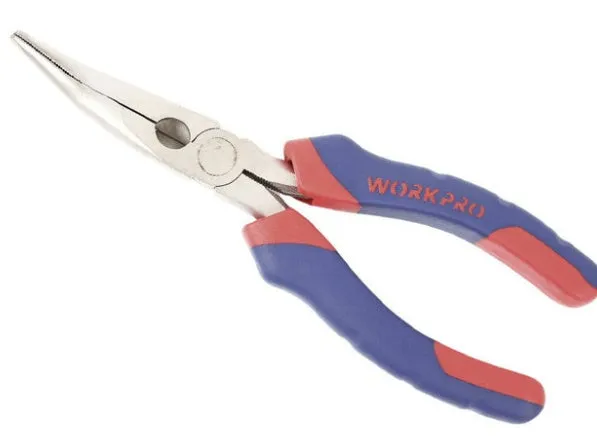
These curved nose pliers combine functional design with practical grip enhancement through their distinctive double-colour rubber-sleeved handles. Ideal for professionals and hobbyists engaged in electronics repair, jewellery making, model assembly, or any task requiring careful manipulation of small components in confined spaces, these pliers offer both visual differentiation and improved handling comfort. The curved nose design allows access to areas where straight-nose tools would be obstructed, making them particularly valuable for precision work where visibility and tool placement are critical. While the source provides specific information about the handle design and general application, exact measurements and technical specifications beyond these features are not detailed, presenting a tool focused primarily on ergonomic handling and accessibility benefits.
Features and Construction

The key features of these pliers centre around their specialised handle design and functional nose shape, which together create a tool suited for detailed manual work requiring both precision and comfort during extended use.
Material and Build
The pliers utilise standard metal construction for the main body and jaws, providing the necessary rigidity and durability for typical precision tasks. The most distinctive feature is the double-colour rubber-sleeved handles, which offer both practical and visual benefits. The rubberised surface improves grip security and reduces hand fatigue during repetitive tasks, while the dual-colour design provides a clear visual reference point that can aid in tool orientation and handling precision. This handle construction addresses the need for comfortable, secure manipulation of small components without requiring specialised tool coatings or finishes beyond the stated rubber sleeve.
Size and Practical Fit
While exact dimensional measurements are not provided in the source material, the curved nose design itself indicates a tool optimised for accessing confined spaces that straight-nose pliers cannot reach effectively. This shape is particularly valuable for electronic circuit board work, jewellery settings, or model assembly where components are often positioned in tight areas with limited clearance. The tool's general proportions appear designed for hand-held precision work rather than heavy-duty applications, suggesting appropriate sizing for detailed manipulation tasks. The absence of specific measurements means users should consider typical curved nose plier dimensions for their intended application when assessing suitability.
Uses and Placement
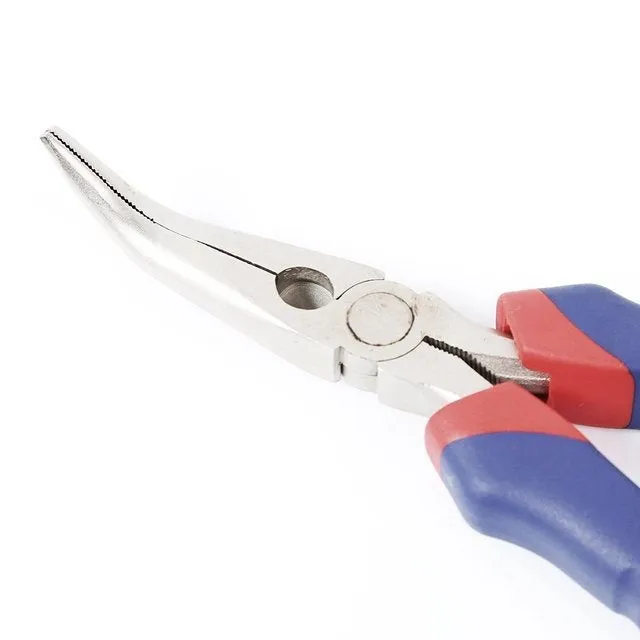
These double-colour handle curved nose pliers find application across multiple domains where precision manipulation of small components in confined spaces is required, from professional technical work to hobbyist projects.
Event or Professional Use
In professional electronics repair environments, these pliers offer the necessary precision for component removal and placement on circuit boards, with the curved nose reaching beneath components and around obstructions that straight tools cannot navigate. For jewellers, the tool provides delicate handling capability for setting stones, adjusting clasps, and manipulating fine wire in areas with limited access. The double-colour handles offer additional benefit in professional settings by providing quick visual identification among multiple tools and reducing hand fatigue during extended work sessions, potentially improving productivity and accuracy in repetitive tasks.
Everyday Home Use
For hobbyists and DIY enthusiasts, these pliers serve well in model building, crafting projects, small appliance repair, and other home workshop applications requiring careful component handling. The enhanced grip from the rubber-sleeved handles makes them suitable for users who may not have professional tool experience, providing additional control and comfort during detailed work. The curved nose proves particularly useful for home electronics projects, jewellery repair, or intricate craft work where standard pliers lack the necessary precision or access capability. Their general-purpose design suits them to various household tasks beyond specialised professional applications.
Benefits and Buying Value

The practical advantages of these curved nose pliers derive from their specific design features rather than technical specifications, offering value through improved handling and accessibility in precision work scenarios.
Reuse and Low Maintenance
Like most quality hand tools, these pliers offer extended usability with minimal maintenance requirements. The metal construction provides inherent durability for typical precision tasks, while the rubber-sleeved handles can be cleaned with a damp cloth to maintain their grip properties. The simple design without complex mechanisms or electronic components ensures long-term reliability with basic care. Regular users will appreciate the tool's capacity for repeated use across multiple projects without significant degradation in performance, assuming appropriate applications within its designed capabilities for precision work rather than heavy-duty tasks.
Why Choose This Product
Selecting these double-colour handle curved nose pliers makes practical sense for anyone requiring improved grip comfort and confined-space access in precision work. The distinctive handle design offers tangible benefits over plain metal handles through enhanced grip security and reduced hand fatigue, particularly during extended use. The curved nose provides functional advantages over straight-nose alternatives when working in obstructed areas. While lacking detailed technical specifications, the tool's combination of these two features addresses common challenges in detailed manual work, making it a logical choice for applications where comfort and accessibility outweigh the need for specialised technical specifications.


