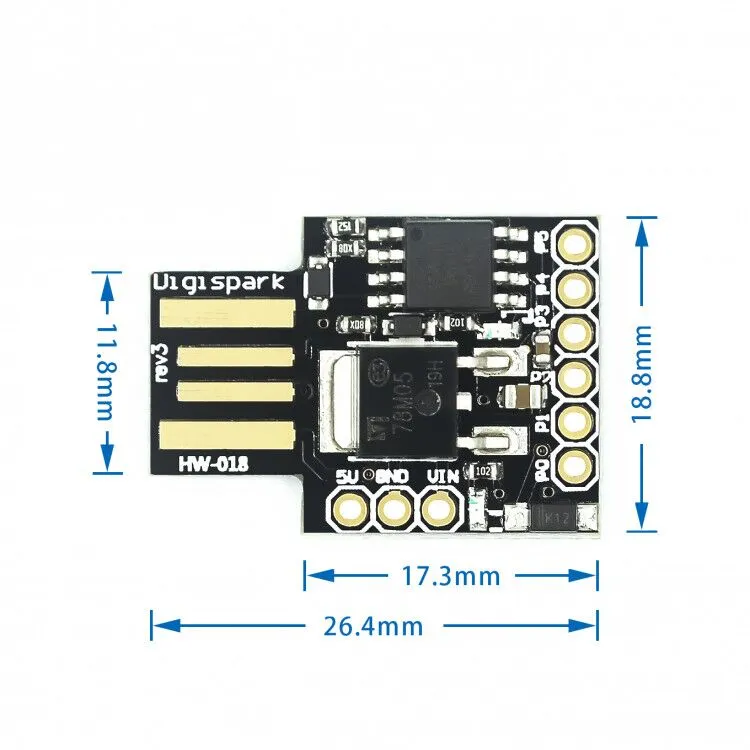
Micro USB Development Board for Arduino IDE Support 5V 7-35V Power USB Serial Debug 6 I/O Pins 8k Flash I2C SPI PWM ADC Black


Micro USB Development Board for Arduino IDE Support 5V 7-35V Power USB Serial Debug 6 I/O Pins 8k Flash I2C SPI PWM ADC Black
Micro USB Development Board for Arduino IDE with Flexible Power and Serial Debug
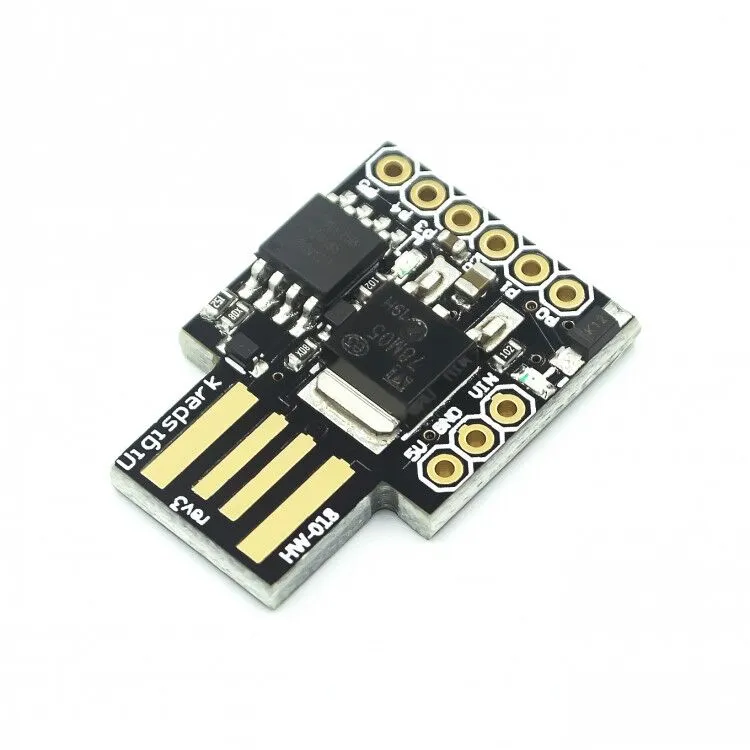
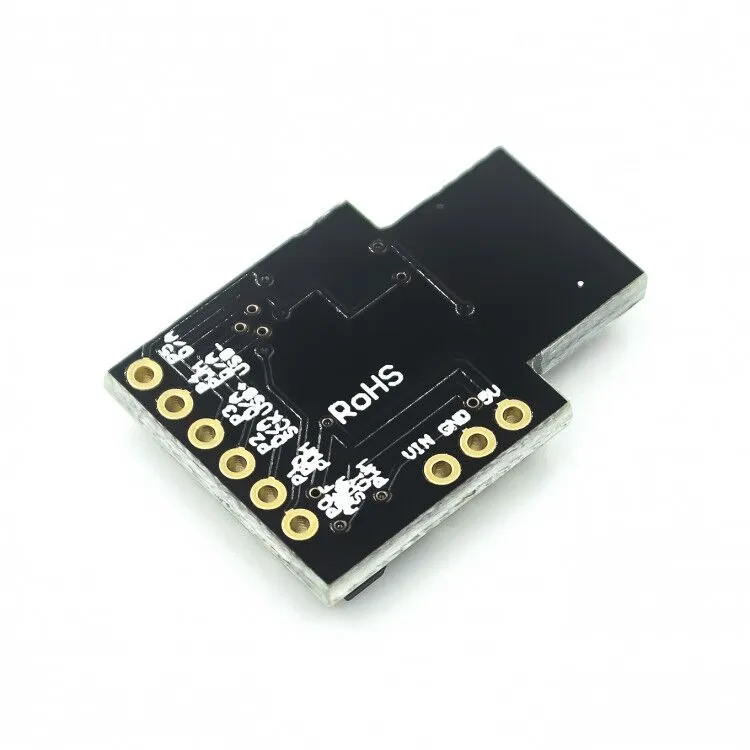
This Micro USB Development Board is designed for makers and engineers working with Arduino-compatible projects. It supports the Arduino IDE 1.0+ across OSX, Windows, and Linux, making it straightforward to program and debug. The board can be powered by USB, a 5V supply, or an external 7-35V supply, with automatic voltage matching for convenience. An onboard 500mA 5V regulator ensures stable power delivery. The compact board includes USB embedded for serial debugging, enabling easy communication with your computer for testing and monitoring.
Features and Construction
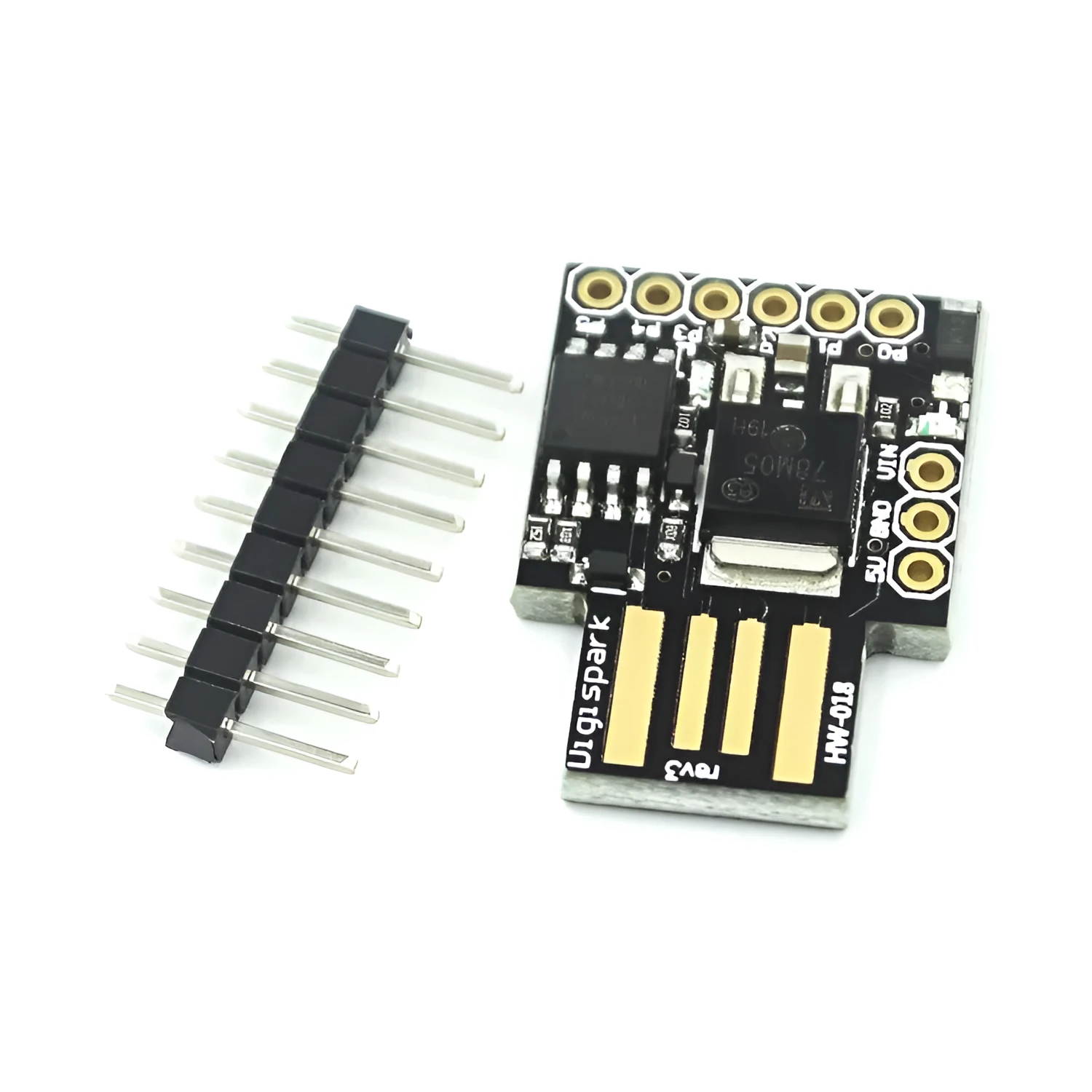
Built for practical embedded development, this board provides the essential I/O and communication interfaces needed for sensor control, data logging, and automation projects. The black PCB design keeps the layout simple and functional.
I/O and Memory
The board features 6 I/O pins, two of which support USB connectivity. It includes 8k Flash Memory, with approximately 6k available after the bootloader. This capacity supports code for a range of simple to intermediate Arduino projects.
Communication and PWM
It supports I2C and SPI interfaces via USI, allowing connection to common peripherals such as displays, sensors, and memory modules. PWM is available on three pins, with additional software PWM possible. ADC is provided on four pins, enabling analogue input from sensors.
Uses and Placement
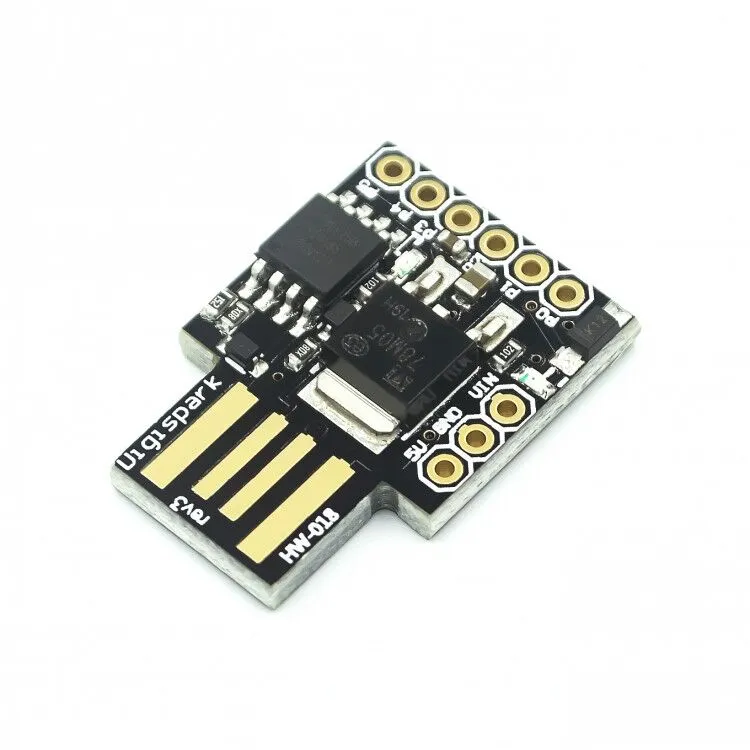
This board is suitable for prototyping, education, and custom embedded applications. Its flexible power input range and serial debug capability make it a practical choice for development and testing.
Learning and Prototyping
Ideal for learning Arduino programming and electronics. The USB connection and serial debug simplify the process of uploading and testing code, while the available I/O pins allow connection to LEDs, buttons, and basic sensors.
Automation and Control
Suitable for small automation projects like temperature monitoring, light control, or simple data logging. The ADC pins can read analogue sensors, and the I2C/SPI interfaces can connect to more complex modules.
Benefits and Buying Value
This board offers a straightforward way to get started with Arduino-based development at a low entry cost. Its versatile power options and built-in debug features reduce setup complexity.
Reusability and Flexibility
The board can be reprogrammed multiple times, making it reusable across different projects. The automatic power matching between USB and external supplies adds flexibility for bench testing or field use.
Compact and Practical
The small form factor saves desk space and fits easily into enclosures. The onboard power and status LEDs provide clear visual feedback, helping users quickly see if the board is powered and running correctly.