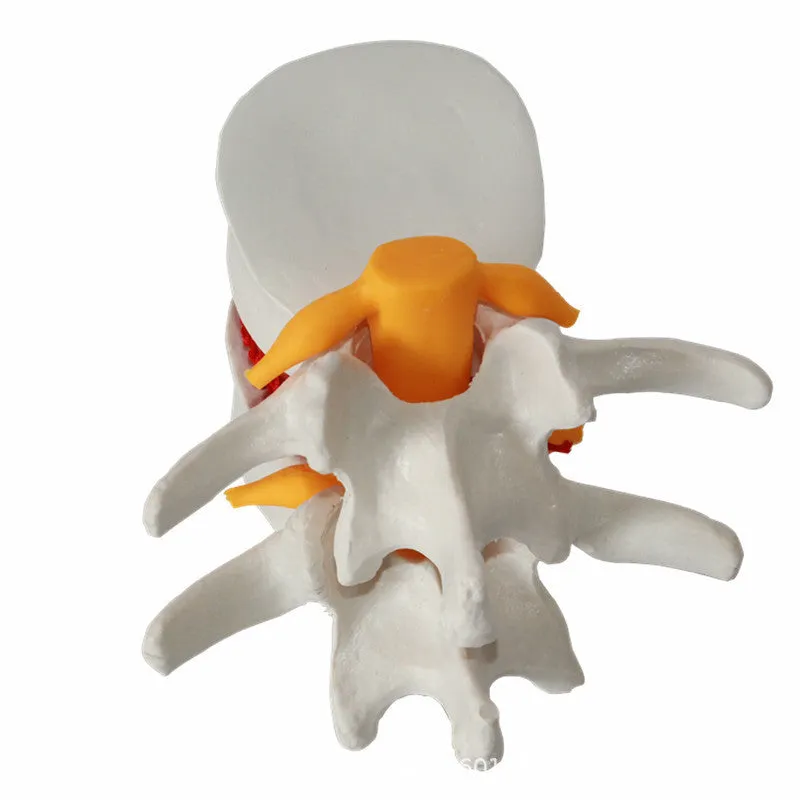
Medical lumbar intervertebral disc demonstration model made from PVC material measuring 11x10x7.6 cm for anatomy education, herniated disc visualisation, and medical student training purposes in a white colour


Medical lumbar intervertebral disc demonstration model made from PVC material measuring 11x10x7.6 cm for anatomy education, herniated disc visualisation, and medical student training purposes in a white colour
PVC lumbar intervertebral disc demonstration model for medical teaching and anatomy education

This anatomical teaching tool provides healthcare educators and medical students with a three-dimensional representation of lumbar spine pathology. Designed specifically to illustrate intervertebral disc herniation, this model offers a practical alternative to complex imaging or cadaver specimens for classroom demonstrations. With its clear white PVC construction, the model shows anatomical relationships and pathological changes in a format that can be handled, examined from multiple angles, and used repeatedly in educational settings. The 11x10x7.6 cm dimensions make it suitable for both individual study and group presentations, while the 220 gram weight ensures it can be easily transported between teaching locations.
Features and Construction
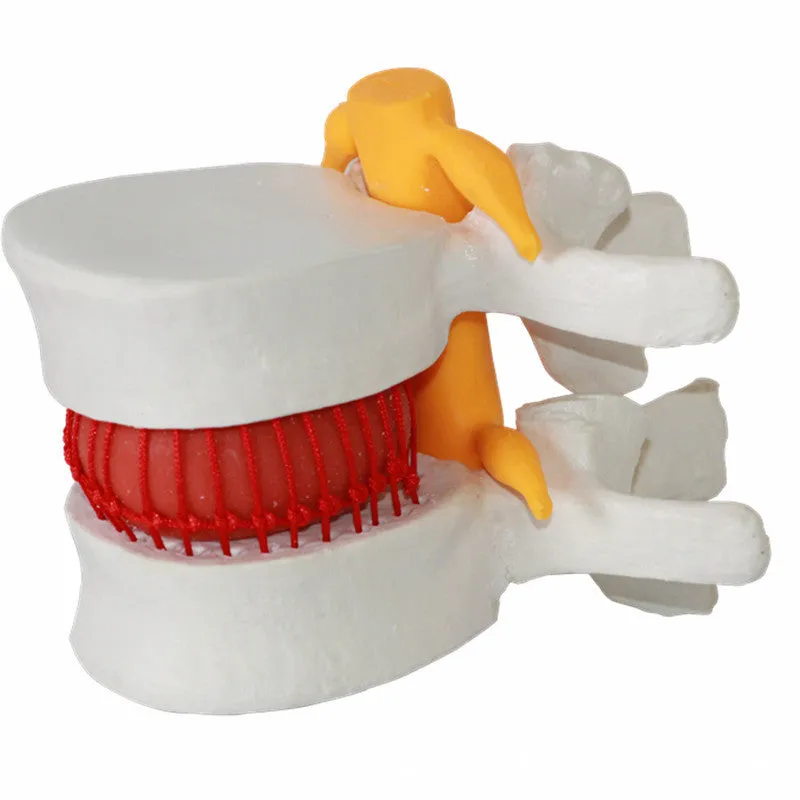
This demonstration model combines anatomical accuracy with practical educational design. The construction focuses on creating a durable teaching aid that withstands regular handling while maintaining clear visual representation of spinal pathology.
Material and Build
The model is manufactured from PVC (polyvinyl chloride), a material selected for its ability to maintain detailed anatomical shapes through repeated educational use. This thermoplastic polymer provides sufficient rigidity to preserve the model's structural integrity while allowing for the creation of precise anatomical features. The white colouration enhances visibility of the lumbar disc herniation details against typical classroom backgrounds. This material choice supports long-term use in educational environments where models may be handled by multiple students during training sessions.
Size and Practical Fit
Measuring 11 cm in length, 10 cm in width, and 7.6 cm in height, this model offers optimal proportions for both close examination and classroom visibility. The dimensions allow instructors to demonstrate key anatomical relationships while maintaining a compact size suitable for storage in standard educational cabinets. Weighing 220 grams, the model provides sufficient substance for stable handling without being cumbersome during extended teaching sessions. The packaging measures 11.5x11x8 cm, offering protective storage that minimises space requirements in medical education facilities.
Uses and Placement

This demonstration model serves multiple educational purposes across different healthcare training contexts. Its design supports both formal instruction and independent study of spinal anatomy and pathology.
Event or Professional Use
In professional medical education settings, this model functions as a visual aid during lectures on lumbar spine disorders, orthopaedic assessments, and neurology training. Medical schools and teaching hospitals can incorporate it into curriculum modules covering back pain diagnosis, spinal anatomy, and intervertebral disc pathology. Continuing medical education providers may use it during workshops for practising physicians learning about diagnostic approaches to lumbar conditions. The model's specific focus on disc herniation makes it particularly relevant for neurosurgery, orthopaedic surgery, and physiotherapy training programmes.
Everyday Home Use
For individual medical students and healthcare professionals, this model supports independent study and skill development outside formal classroom settings. Students can use it to reinforce understanding of spinal anatomy, memorise structural relationships, and prepare for practical examinations. Allied health professionals might reference it when explaining lumbar conditions to patients in clinical settings. The compact size allows for storage in study spaces, while the durable PVC construction withstands regular handling during revision sessions and self-directed learning activities.
Benefits and Buying Value

This anatomical model offers practical advantages for medical education programmes seeking effective teaching tools. The design prioritises functionality and durability within educational contexts.
Reuse and Low Maintenance
The PVC construction enables repeated use across multiple academic terms and student cohorts without significant degradation of anatomical detail. Unlike biological specimens that require special preservation, this synthetic model maintains its educational value through straightforward handling and storage. The material resists typical classroom wear while remaining lightweight enough for regular transport between teaching locations. This durability supports extended service life within resource-conscious educational institutions.
Why Choose This Product
This demonstration model provides a specialised educational tool focused specifically on lumbar intervertebral disc pathology, unlike more general spinal models. The 11x10x7.6 cm dimensions offer an optimal balance between anatomical detail and practical classroom handling. The white PVC construction ensures clear visibility of herniated disc features against various classroom backgrounds. For medical educators requiring a dedicated teaching aid for spinal conditions, this model delivers targeted anatomical representation without the complexity or ethical considerations of biological specimens.